
An hour of inspection in spring and fall prevents most expensive roof emergencies. Here is the same 21-point checklist we use on every free inspection — what to look for, where to look, and what to do when you find a problem.
Most of these checks you can do yourself from the ground or in the attic. A few require a professional. We'll flag which is which.
The Spring Checklist (Right After Snow Melts)
Spring inspection is about damage from winter — ice dams, wind, snow load, and freeze-thaw stress.
### From the Ground (Walk the Perimeter)
**1. Look for missing, curled, or cracked shingles** on every slope. Wind damage shows as lifted edges or gaps. Curling edges mean the sealant strip has failed and the shingle is at end-of-life. Cracked shingles point to freeze-thaw stress.
**2. Check the gutters for granules.** A handful of granules after a heavy spring rain is normal. A cup or more means the shingle surface is degrading and end of life is approaching.
**3. Look for dark streaks** running down the roof. Black streaks are algae (cosmetic, treatable). Brown or gray streaks usually mean granule loss exposing the asphalt mat (more serious).
**4. Check the eaves and fascia** for water staining, paint bubbling, or wood discoloration. These point to ice dam damage from the previous winter.
**5. Check the soffit** for darkening, drooping, or peeling paint. Sometimes the only visible sign of attic moisture.
**6. Inspect every downspout's outlet.** Erosion patterns in the soil tell you where water is concentrating. Water should be carrying at least four feet from the foundation.
### In the Attic (Bring a Flashlight, Pick a Sunny Day)
**7. Look for daylight through the roof deck.** Any pinpoint of light is a hole. Mark it.
**8. Look for water staining** on the underside of the deck or rafters. Old stains are dry and dark; new ones are damp or freshly colored.
**9. Check insulation for moisture or compression.** Wet insulation has lost most of its R-value and points to active leakage.
**10. Check soffit vents** for blockage. Insulation pushed against soffits is the #1 cause of poor attic ventilation in Northeast Ohio homes.
**11. Smell.** Musty or mildew smell points to moisture you may not see yet.
### Up Close (If You Can Do It Safely)
**12. Examine flashing** around chimneys, walls, vents, and skylights. Lifted, rusted, or separated flashing is the source of most roof leaks. Replace before they leak.
**13. Inspect pipe boots** at every plumbing penetration. The rubber gasket at the base cracks and fails on a 10–15 year cycle. Cheap to replace, expensive to ignore.
**14. Check the ridge** for missing or damaged ridge cap shingles. Wind damage often hits the ridge first.
If climbing the roof is not safe (and for most homeowners it is not), call us for a free professional inspection.
The Fall Checklist (Before Winter Sets In)
Fall inspection is about preparing for snow load, ice dams, and freeze-thaw — and catching anything that can't wait through another winter.
**15. Repeat checks 1–14 from the spring list.** Anything that's been deteriorating since spring is now worse.
**16. Clean every gutter and downspout completely.** Clogged gutters in winter = ice dams in January.
**17. Trim overhanging branches** at least six feet back from the roof. They drop debris into gutters, scratch shingles in wind, and provide an animal highway.
**18. Check attic insulation depth.** Northeast Ohio code minimum is R-49 in the attic floor. Many older homes have R-19 or less. R-49 is roughly 16 inches of fiberglass batts or 14 inches of blown-in cellulose.
**19. Verify attic ventilation.** Soffit vents should be unblocked. Ridge vent should be clear. Bath fans and dryer vents should terminate outside, not into the attic.
**20. Test heat cables** if you have them. The annual failure rate is high enough that they should be tested every fall before the first heavy snow.
**21. Look at your roof's age** and remaining warranty. If the roof is 15+ years old, get a professional inspection before another winter pushes it past its useful life.
Red Flags That Mean Call a Pro Now
Some problems should not wait for the next inspection cycle. Call within a week if you see:
- Water staining on a ceiling that has grown since you last looked
- Daylight visible through the roof deck from inside the attic
- Sagging anywhere on the roof line
- A roof slope that looks visibly different in shade or color from adjacent slopes
- Multiple shingles on the lawn after a wind event
- Dark spreading mold in the attic
- A musty smell that doesn't go away
- Hail dents on gutters, downspouts, or AC fins (especially after a recent storm)
What's Worth DIY and What's Not
Worth DIY:
- Walking the perimeter and looking up
- Cleaning gutters
- Trimming branches
- Checking the attic with a flashlight
Not worth DIY:
- Climbing on the roof, especially when wet, snowy, or steep
- Replacing flashing or pipe boots (specialty work)
- Removing ice dams (steam-only, not for homeowners)
- Anything involving electricity-adjacent areas
The risk-reward of homeowner roof work is bad — falls from roofs are one of the most common serious home-injury sources in the country. We do free professional inspections. There is no reason to climb up there yourself.
Get a Free Professional Inspection
A 21-point inspection from us costs nothing and takes about an hour. We do an exterior walk-around, climb the roof safely, document everything with photos, and provide a written report — even if you don't hire us. We'll tell you exactly what we see, what's urgent, what can wait, and what would cost to fix. No pressure, no upselling.
Call (440) 645-2003 or request a free inspection online. We service Ashtabula, Lake, Geauga, Cuyahoga, Summit, and Mahoning counties.
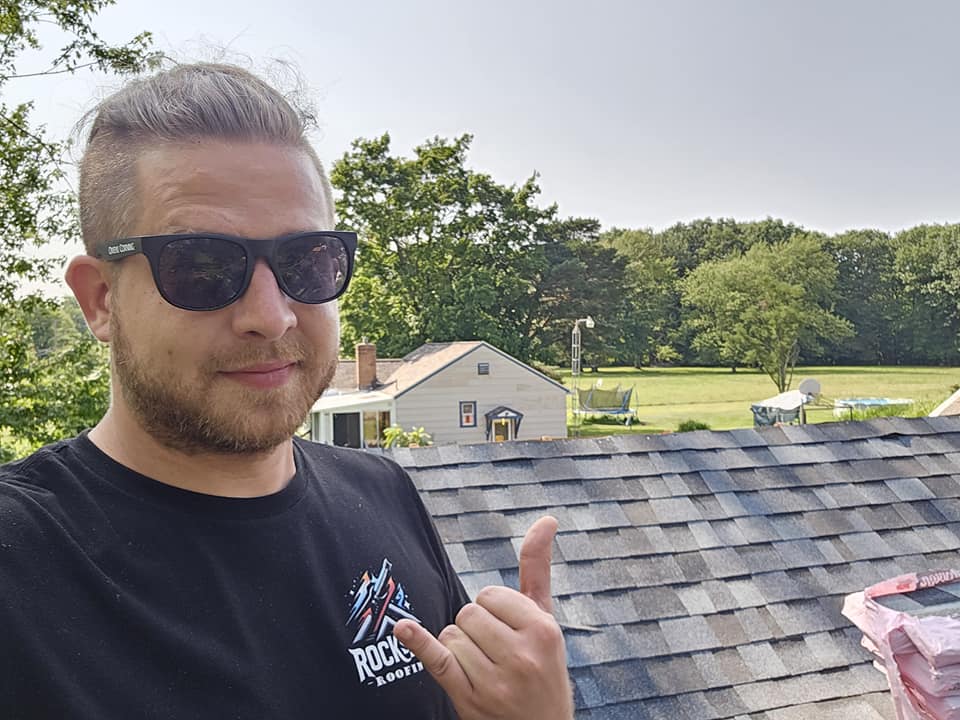
About the Author
Mike Ende — Founder, Rockstar Roofing LLC
Mike Ende has 9+ years of Northeast Ohio roofing experience and founded Rockstar Roofing LLC in 2024. He is an Owens Corning Duration installer, BBB A-rated, fully insured, and personally answers the phone at (440) 645-2003. Based in Ashtabula, OH, Mike serves homeowners across Ashtabula, Lake, Geauga, Cuyahoga, Summit, and Mahoning counties.
Read Mike’s full story →This article was last reviewed and updated on May 8, 2026 by Mike Ende, founder of Rockstar Roofing LLC.