
This is the comprehensive Northeast Ohio roof replacement guide. Whether your roof is leaking, aging, storm-damaged, or you're just planning ahead, this is the reference document homeowners come back to.
Read it end-to-end if you're early in research. Skip to specific sections if you have specific questions.
Section 1: When You Need to Replace Your Roof
Six clear signals that mean replacement, not repair:
**1. Age over 20 years (asphalt shingles).** Architectural shingles in Northeast Ohio's climate have a practical service life of 25–30 years. By year 20, they're in the final third of useful life. Granule loss accelerates, sealant strips fail, wind vulnerability increases. Replace before the next major storm forces an emergency.
**2. Widespread granule loss.** Granules in your gutters after every rain. Bare asphalt visible on shingles. Dark streaks where granule layer has thinned. Once granule loss is general (not just one or two slopes), the underlying asphalt is exposed to UV and degrades within 2-3 years.
**3. Multiple leaks in different areas.** A single leak around a chimney is a flashing problem — repair. Multiple leaks in different parts of the roof indicate systemic failure — replace.
**4. Sagging deck.** Visible sag along the roof line. Soft spots underfoot when walking the roof. Wet OSB has lost structural integrity. Spot repair won't restore it.
**5. Daylight in the attic.** Pinpoints or larger spots of light visible through the deck means active holes. Multiple holes mean the roof is failing.
**6. Insurance-approved storm damage claim.** When insurance approves a full replacement, the math changes — your out-of-pocket cost drops to just the deductible. Take the replacement.
Section 2: Repair vs Replace Decision Framework
If your roof has none of the six signals above and the damage is localized, repair is usually the right call.
Cost ranges:
- Targeted repair (single section): $300–$2,000
- Full replacement: $9,000–$15,000 (typical home)
Repair makes sense when:
- Roof is under 15 years old
- Damage is on one slope or one feature
- Surrounding areas show good condition
- No insurance claim is in play
Replace makes sense when:
- Any of the six signals from Section 1 is present
- Roof is 20+ years old regardless of visible condition
- Insurance has approved a covered claim
- You're planning to sell within 2 years
When in doubt, get a written assessment from a roofer that explicitly states "remaining useful life" and use that to decide.
Section 3: Material Selection
Five primary options for Northeast Ohio homes:
**1. Architectural asphalt shingles (most common).** $9,000–$15,000 typical. 25–30 year lifespan. Owens Corning Duration is our default — 130 MPH wind warranty, broad color selection, balanced performance for Ohio's climate.
**2. Class 4 impact-resistant shingles (premium asphalt).** Add $1,200–$2,500 to typical asphalt cost. 30–35 year lifespan. Often qualifies for insurance discount in hail-prone areas (Geauga County especially).
**3. Standing-seam metal.** $20,000–$45,000. 50+ year lifespan. Best for homes near Lake Erie (heavy snow shedding) and long ownership horizons.
**4. Slate.** $25,000–$80,000+. 75–125 year lifespan. Common on historic Cleveland Heights, Shaker Heights, Chagrin Falls homes. Requires structural reinforcement on most modern homes.
**5. Synthetic slate (composite).** $18,000–$35,000. 50-year warranty. Looks like slate at half the cost.
For most Northeast Ohio homes, architectural asphalt at the $9,000–$15,000 tier is the right answer. Upgrade to Class 4 in hail zones; upgrade to metal for long ownership.
Section 4: How to Read a Roof Estimate
A complete estimate must specify all 14 of these line items:
1. Tear-off scope (number of layers being removed)
2. Deck inspection and panel-replacement allowance (per-sheet pricing)
3. Ice and water shield linear footage (specify product and coverage area)
4. Synthetic underlayment (brand and grade)
5. Drip edge material (aluminum, color)
6. Pipe boot replacements (count and brand)
7. Step flashing replacement (specify aluminum, not reused)
8. Starter strip product (Owens Corning ProEdge or equivalent)
9. Shingle brand, product line, and color
10. Ridge cap product (matching dimensional, not cut field shingles)
11. Ridge vent or box vents (linear feet or count)
12. Permit cost (separate line, paid to municipality)
13. Cleanup with magnetic-sweep guarantee
14. Workmanship warranty in writing (term in years)
Estimates with single-line "Roof Replacement: $X" or vague "as needed" language are designed to make comparison impossible. Insist on the line items.
Section 5: Choosing a Contractor
Five non-negotiable verification steps:
**1. Permanent local address.** Ask for the street address. Drive by it. If it doesn't exist or it's a rented mailbox, end the conversation. Real local contractors have real addresses.
**2. Ohio Secretary of State business filing.** Search the contractor name at ohiosos.gov. The business should appear with active filing status and a registered Ohio address.
**3. Certificate of Insurance.** Request directly from the contractor — should show general liability ($1M+) and workers' compensation. Verify with the insurance company directly.
**4. References in your specific city.** Ask for three completed jobs in your city within the last 12 months. Real local contractors have dozens; storm chasers have none.
**5. Written workmanship warranty.** 5+ years minimum. 10 years is the gold standard. If verbal-only, walk away.
Five red flags that should end the conversation:
- Out-of-state license plates
- Door-to-door solicitation after a storm
- "We'll cover your deductible" (insurance fraud in Ohio)
- Pressure to sign on the spot
- Demands for >25% deposit upfront
Section 6: The Insurance Claim Process
If your damage is from a covered storm event, the process:
**Step 1: Document immediately (first 24 hours).** Photograph all visible damage from the ground. Bag debris with the date. Check attic for daylight or staining. Don't climb the roof in active weather.
**Step 2: Call a roofer BEFORE the insurance company.** A free professional inspection identifies all damage (hail bruising, lifted shingles, compromised flashing) that the homeowner can't see from the ground. Documented contractor inspections produce 20–40% higher settlements.
**Step 3: File the claim.** Provide your policy number, date of damage, and contractor documentation. Insurance assigns a claim number and adjuster.
**Step 4: Adjuster meeting with contractor present.** This is the highest-leverage step in the entire process. Your contractor walks the roof with the adjuster, marks every hail hit with chalk, photographs damage, and ensures nothing is missed in the adjuster's report.
**Step 5: Review the scope.** If the adjuster's initial estimate is too low, file a supplement with additional documentation. Most carriers accept supplements; some don't, in which case escalation to a public adjuster may be needed.
**Step 6: Schedule the work.** Once approved, schedule the install. We coordinate directly with insurance for final payment.
File within 30 days of the storm event for highest approval rates. Ohio law allows up to one year, but practical experience says 30 days produces dramatically higher approvals.
Section 7: The Install Process — Day by Day
Most Northeast Ohio replacements follow this timeline:
**Day -7 to -1 (the week before):** Permit pulled. Materials delivered. Crew scheduled. Homeowner instructions provided (clear driveway, move vehicles, take down wall art, keep pets indoors).
**Day 0 (install morning, 7-8 AM):** Crew arrives, positions tarps to protect landscaping and AC unit. Tear-off begins on the south or east slope where work warms fastest.
**Day 0 (mid-morning):** Tear-off complete down to deck. Deck inspection begins. Any rotted panels are replaced.
**Day 0 (late morning):** Ice and water shield rolled out at all eaves and valleys. Synthetic underlayment installed across the rest of the deck.
**Day 0 (early afternoon):** Drip edge installed at all eaves and rakes. Step flashing installed at chimneys and walls. Pipe boots installed at all penetrations.
**Day 0 (afternoon):** Starter strip installed. Shingles begin going on, starting from the eave and working up.
**Day 0 (late afternoon):** Ridge cap installed. Ridge vent or box vents installed. All shingles complete.
**Day 0 (5-6 PM):** Final cleanup. Magnetic-sweep across yard and driveway. Tarps removed. Final walkthrough with homeowner.
**Day +1 to +5:** Municipal final inspection. Warranty registration filed with manufacturer.
**Day +5 to +10:** Closed permit document delivered to homeowner.
Most homes complete in a single day. Larger or more complex roofs (steep pitches, multiple dormers, two stories with large square footage) extend to 2 days.
Section 8: After the Install
**First week:** Walk the perimeter and yard for any leftover nails. Quality crews magnetic-sweep but stragglers happen. Walk barefoot if you're confident; if you have kids running around the yard, walk it with shoes for an extra day or two.
**First month:** Check the attic during the next heavy rain. Watch for any unexpected leaks (rare on quality installs but possible on the first heavy weather). Document any concerns with photos.
**First year:** No special action needed. Shingles seal in summer heat. Sealant strip activates within the first 60-90 days of warm weather.
**Year 1-5:** Annual professional inspection ($0 with us). Twice-yearly attic inspection by homeowner.
**Year 5-15:** Continue annual inspections. First repairs (pipe boots, sealant, occasional shingle) typical at year 10-15.
**Year 15-25:** Roof in mature service. Watch for granule loss patterns, lifted edges. Plan for replacement within next 5-10 years.
**Year 25+:** Replacement window. Budget accordingly.
Section 9: Warranty Coverage in Detail
Two warranties on every quality roof:
**Manufacturer warranty (Owens Corning Duration):**
- Limited lifetime against defects in shingle material
- 130 MPH wind warranty (with proper installation)
- 15-year algae resistance via StreakGuard
- 10-year tear-off coverage if defect requires shingle removal
- Prorated after year 10
- Transferable once on resale
**Contractor workmanship warranty (Rockstar Roofing):**
- 10 years on installation
- Covers any failure caused by how we installed (not the materials)
- In writing, not verbal
- Survives our business sale or transition
Important: most "lifetime" warranties cover only material defects, not installation errors or storm damage. The two warranty types are separate. You need both for full coverage.
Section 10: Service Areas Across Northeast Ohio
We serve six counties:
- **Ashtabula County:** Ashtabula, Conneaut, Geneva, Jefferson, Andover
- **Lake County:** Mentor, Painesville, Willoughby, Eastlake, Wickliffe, Mentor-on-the-Lake, Concord, Kirtland
- **Geauga County:** Chardon, Chesterland, Munson Township, Bainbridge
- **Cuyahoga County:** Cleveland, Solon, Beachwood, Shaker Heights, Chagrin Falls, Mayfield Heights, Gates Mills
- **Summit County:** Akron, Cuyahoga Falls, Stow, Hudson, Tallmadge
- **Mahoning County:** Youngstown, Boardman, Canfield, Poland
Each county has specific climate, building code, and permit considerations. Lake-effect snow is heaviest in northern Lake and Ashtabula counties. Hail risk is highest in Geauga and southern Cuyahoga. Akron and Cuyahoga Falls see fewer extreme weather events but more freeze-thaw cycles. We tailor recommendations to your specific area.
Section 11: What Sets Northeast Ohio Apart
Three local factors shape every roof here:
**1. Lake-effect snow.** Lake Erie generates heavy localized snowfall in cities along the shoreline. Mentor and Eastlake routinely see 2-3x the snowfall of inland cities like Akron. Roofs here need robust ice and water shield coverage and balanced ventilation to handle the load.
**2. Freeze-thaw cycles.** Lake Erie's moderating effect keeps temperatures oscillating around freezing more often than inland regions. Northeast Ohio averages 80-100 freeze-thaw cycles per year — among the highest in the country. This stresses every flashing seam and shingle granule.
**3. Sudden severe weather.** Spring and summer hailstorms move east-northeast across Lake Erie. Geauga County sees the heaviest hail because storms gain strength crossing warm lake air. Chardon and Chesterland routinely take Class 4-rated impact-resistant shingles to qualify for insurance discounts.
These three factors mean Ohio roofs need more than the manufacturer's minimum specifications. Quality installs in this climate include extended ice and water shield, balanced ventilation, and impact-resistant materials in hail zones.
Section 12: Free Inspection and Next Steps
If your roof is showing any signs of needing attention — or you're just planning ahead — start with a free inspection. We document everything with photos, provide a written assessment of remaining useful life, and give you a written estimate if replacement makes sense.
Call (440) 645-2003 or request a free inspection online. Same-week scheduling across all six counties.
Sources & Further Reading
- National Weather Service Cleveland — local weather patterns
- Owens Corning Duration product specifications
- Ohio Department of Insurance — homeowners coverage
- Ohio Attorney General — Home Improvement Tips
- InterNACHI — residential roof inspection standards
- U.S. Department of Energy — attic ventilation
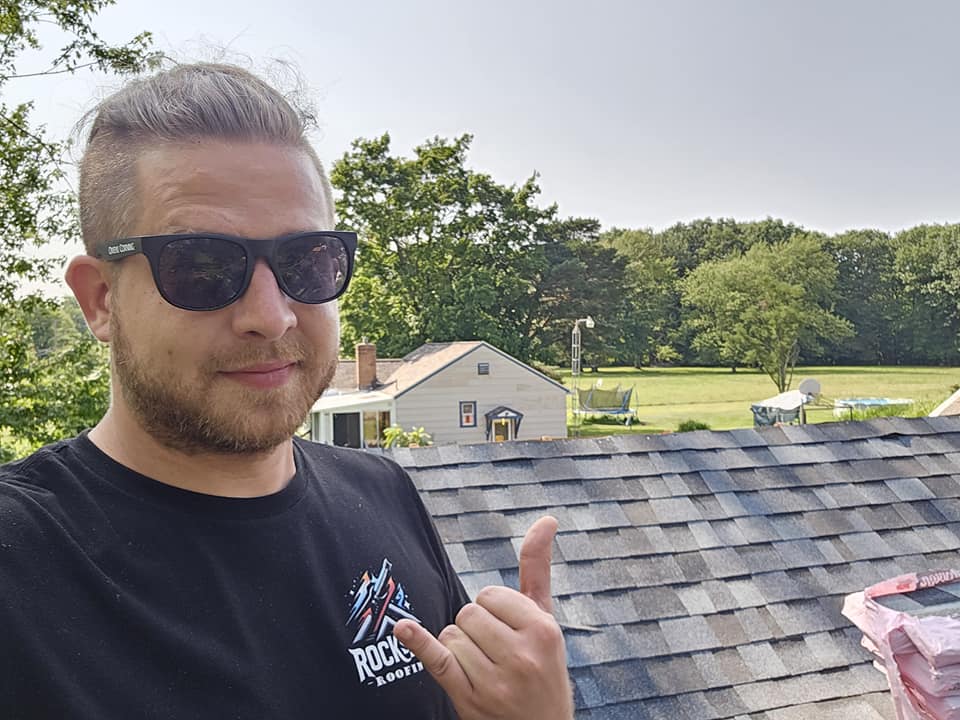
About the Author
Mike Ende — Founder, Rockstar Roofing LLC
Mike Ende has 9+ years of Northeast Ohio roofing experience and founded Rockstar Roofing LLC in 2024. He is an Owens Corning Duration installer, BBB A-rated, fully insured, and personally answers the phone at (440) 645-2003. Based in Ashtabula, OH, Mike serves homeowners across Ashtabula, Lake, Geauga, Cuyahoga, Summit, and Mahoning counties.
Read Mike’s full story →This article was last reviewed and updated on June 15, 2026 by Mike Ende, founder of Rockstar Roofing LLC.