
Most homeowners think of roof aging as a slow, even process — shingles wear out at the same rate everywhere, the roof needs replacement at year 25, end of story. The reality is more aggressive than that, especially in Northeast Ohio.
Our climate puts roofs through 80–100 freeze-thaw cycles per year. Each one slowly destroys specific parts of the roof system. By year 15, an Ohio roof has experienced 1,200–1,500 cycles. By year 25, more than 2,000.
Here's what's actually happening at the molecular level — and the specific upgrades that resist freeze-thaw damage.
The Physics of Freeze-Thaw Damage
Water expands roughly 9% when it freezes. That number sounds small until you scale it up.
Imagine a hairline crack in chimney mortar that holds 0.5 mL of water. When that water freezes, it expands to 0.55 mL. The 0.05 mL of expansion has to go somewhere — and it pushes outward on the mortar surrounding it. Each cycle, that crack widens slightly. Over 100 cycles per year, the crack grows from invisible to obvious. Over 5 years, the mortar joint fails completely.
This same process happens at every absorbent surface on a roof:
- Asphalt shingle granules absorb water; freezing pushes the granule loose
- Mortar joints around chimneys absorb water; freezing widens cracks
- Flashing caulk dries and cracks; water gets in; freezing widens the gap
- OSB roof decking absorbs moisture from any leak; freezing delaminates the layers
The damage is invisible per cycle. The damage is dramatic over years.
Why Northeast Ohio Is Especially Aggressive
Three local factors:
**1. Lake Erie's moderating effect drives more cycles.** Inland areas in colder climates often stay frozen for weeks at a time — fewer cycles, less expansion damage. Northeast Ohio's lake effect keeps temperatures oscillating around freezing for much of winter. The same week can deliver 4–6 freeze-thaw cycles instead of one continuous freeze.
**2. High winter humidity.** Lake-effect snow saturates roofs with moisture. Saturated materials freeze and thaw more aggressively than dry ones.
**3. Heavy snow load that melts and refreezes.** Each major snowfall represents thousands of pounds of water on the roof. Sun melts the upper roof; meltwater refreezes at colder eaves and overhangs. Same physics, repeated thousands of times per winter.
What Specifically Fails Under Freeze-Thaw
Five vulnerabilities, ranked by how often we see them as the failure point on aging Ohio roofs:
### 1. Flashing Caulk and Sealant (50% of leak diagnoses)
Caulk between flashing and brick, between flashing and shingles, around pipe boots, at chimney crowns. Modern silicone caulks handle freeze-thaw reasonably well but lose elasticity after 8–12 years and start cracking. Old butyl-rubber sealants (common on 1980s–90s roofs) fail after 5–7 years.
The caulk-failure leak pattern: water staining at chimneys or skylights, gradually growing year over year, no specific storm event causing it. We re-caulk during every roof inspection where the existing caulk is more than 10 years old.
### 2. Mortar Joint Cracking on Chimneys (20%)
Chimney mortar absorbs water through tiny pores in the joint. Freeze cycles widen the pores into hairline cracks, then visible cracks, then missing chunks. By year 30 of a typical brick chimney, mortar repointing is required.
This isn't strictly a roof problem (a mason's job) but the failure cascades into roof leaks because cracked mortar lets water down inside the chimney structure where it then exits at the roof line.
### 3. Granule Loss on Aging Shingles (15%)
Shingle granules are held in place by adhesive that breaks down with freeze-thaw exposure. Year-by-year, granules loosen and fall into gutters. Once the granule layer is depleted, the underlying asphalt is exposed to UV, which destroys it within 2–3 years.
This is the primary reason 25-year-warrantied shingles fail at year 18–20 in Ohio. The freeze-thaw cycle accelerates the aging more than the warranty assumed.
### 4. Underlayment Tearing at Wind-Lifted Edges (10%)
Where wind has lifted a shingle edge, water gets behind. Freezing water expands and tears the underlayment beneath. Even if the shingle re-seals on a warm day, the underlayment damage is permanent. Future water entry has a path to the deck.
### 5. Deck Delamination from Slow Leaks (5%)
A small leak that wets OSB decking. Saturated OSB freezes and the layers separate. Over years, the deck loses structural strength and develops soft spots underfoot.
What Resists Freeze-Thaw
Six specific upgrades that make roofs perform better in Ohio's climate:
### 1. Architectural Shingles, Not 3-Tab
Architectural (laminated) shingles use a thicker construction with multiple layers. Freeze-thaw still affects them but on a longer timeline — 25–30 years vs. 15–20 for 3-tab.
### 2. Class 4 Impact-Resistant Shingles
Premium Class 4 shingles (Owens Corning Duration FLEX, GAF Armor Shield II) use modified asphalt that holds granules better and resists hairline cracking. The freeze-thaw resistance is meaningful — these shingles often deliver 30–35 years of life in Ohio vs. 25–30 for standard architectural.
### 3. Six Feet of Ice and Water Shield at Eaves
Code minimum is 24 inches past the heated wall line. Six feet up from every eave provides redundancy when ice dams form. The membrane prevents water from reaching the deck even when shingles fail seasonally.
### 4. Synthetic Underlayment Across the Whole Deck
Old-style felt paper (#15 felt) absorbs water and degrades under freeze-thaw. Synthetic underlayment (Owens Corning RhinoRoof, Titanium UDL, similar) is dimensionally stable across thousands of cycles.
### 5. Balanced Attic Ventilation
Inadequate ventilation creates winter condensation in the attic. That condensation soaks the underside of the roof deck and accelerates freeze-thaw delamination. Balanced soffit-to-ridge ventilation eliminates the moisture buildup.
### 6. Annual Caulk Maintenance at Flashing
Every flashing seam, every chimney joint, every skylight edge — caulk fails on a 5–10 year cycle. Pre-emptive replacement during a routine inspection (15 minutes per chimney, 5 minutes per skylight) prevents the leak that would otherwise show up after the next winter.
The Roof That Lasts 30+ Years in Ohio
The combination is what matters:
- Class 4 architectural shingles
- Six feet ice and water shield at every eave + full valley coverage
- Synthetic underlayment across the whole deck
- Balanced ridge-and-soffit ventilation
- Aluminum (not galvanized steel) flashing
- Modern silicone-based sealants at every penetration
- Annual professional inspection with caulk replacement as needed
A roof built and maintained this way regularly delivers 30+ years in Northeast Ohio. A budget roof built without these elements often fails at year 15.
Free Inspection That Identifies Freeze-Thaw Damage
We document caulk condition, mortar joint integrity, granule loss patterns, and underlying deck condition during every free inspection. Written report and photo documentation included.
Call (440) 645-2003 or request a free inspection. Serving Ashtabula, Lake, Geauga, Cuyahoga, Summit, and Mahoning counties.
Sources & Further Reading
- U.S. Department of Energy — building envelope and freeze-thaw
- American Society of Civil Engineers — freeze-thaw durability
- Owens Corning — Duration shingle performance specifications
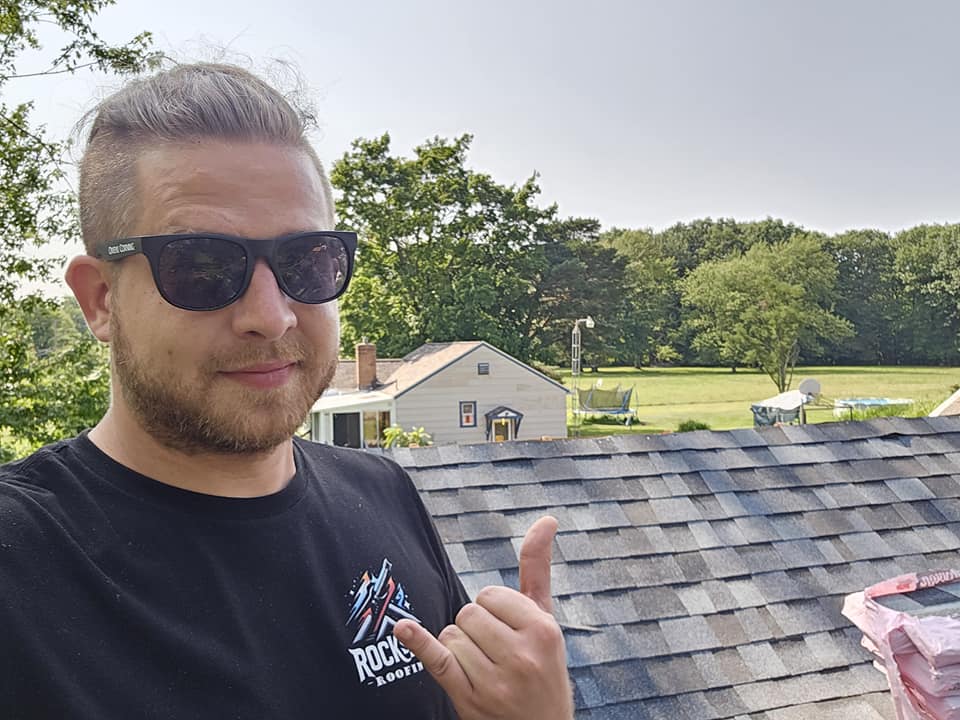
About the Author
Mike Ende — Founder, Rockstar Roofing LLC
Mike Ende has 9+ years of Northeast Ohio roofing experience and founded Rockstar Roofing LLC in 2024. He is an Owens Corning Duration installer, BBB A-rated, fully insured, and personally answers the phone at (440) 645-2003. Based in Ashtabula, OH, Mike serves homeowners across Ashtabula, Lake, Geauga, Cuyahoga, Summit, and Mahoning counties.
Read Mike’s full story →This article was last reviewed and updated on May 6, 2026 by Mike Ende, founder of Rockstar Roofing LLC.