
Manufacturer warranties tell you the optimistic number. The real-world number — what your roof will actually deliver in Mentor, Painesville, Ashtabula, or Chardon — depends on three local factors: the freeze-thaw cycle, lake-effect snow load, and the quality of your attic ventilation.
Here is what we see across thousands of roofs in Northeast Ohio.
Asphalt Shingles — The Most Common Roof in Ohio
**3-tab asphalt: 15–20 years**
Three-tab shingles were the budget standard for decades and you still see them on rentals and mid-century ranches. In Ohio's climate they degrade faster than rated because the freeze-thaw cycle stresses the brittle sealant strips. We rarely install 3-tab anymore — the price difference vs. architectural is small enough that it is almost always worth the upgrade.
**Architectural (dimensional/laminated) asphalt: 25–30 years**
This is the modern standard. Owens Corning Duration, GAF Timberline HDZ, and CertainTeed Landmark all fall in this range. The thicker, layered design handles wind, hail, and freeze-thaw far better than 3-tab. With proper installation and balanced ventilation, 30 years is a reasonable expectation. Without good ventilation, knock 5–8 years off.
**Premium impact-resistant asphalt (Class 4): 30–35 years**
Owens Corning Duration FLEX, GAF Armor Shield II, and similar Class 4-rated products. Designed to take a 2-inch hailstone without cracking. Common upgrade in hail-prone Geauga County (Chardon, Chesterland, Munson Township) where insurance discounts often offset the cost difference within 5–7 years.
Metal Roofing — The Long-Game Choice
**Steel standing-seam: 50+ years**
The right answer for homes near Lake Erie that take heavy snow loads. Standing-seam sheds snow efficiently, never has the freeze-thaw seam-failure problem of asphalt, and routinely outlasts the original homeowner. Most steel standing-seam roofs replaced in Ohio are being replaced because of cosmetic fading, not failure.
**Aluminum standing-seam: 50+ years**
Lighter than steel and naturally rust-resistant. Costs more upfront but can be the right call near the lakeshore where salt air accelerates steel corrosion.
**Stamped metal (shingle profile): 40–50 years**
Looks like asphalt or shake from the street, performs like metal. Higher upfront cost than asphalt but pays back over time in durability and lower insurance.
Slate and Tile — The 100-Year Roofs
**Natural slate: 75–125 years**
You see slate on older homes in Cleveland Heights, Shaker Heights, and Lake Erie shoreline neighborhoods. The slate itself is essentially permanent — what fails is the underlayment, flashing, and fasteners. A slate roof that has had its flashing properly maintained outlasts every other material option.
**Synthetic slate (composite): 50 years**
A modern alternative. Looks similar to slate at half the weight and a third of the cost. Shorter warranty than real slate but still 50+ years of expected service.
**Clay tile: 75+ years**
Rare in Northeast Ohio because the freeze-thaw cycle is hard on traditional clay tile. Concrete tile is more common but still uncommon in our climate.
Flat Roofing Systems
**TPO (thermoplastic polyolefin): 20–30 years**
The dominant commercial flat-roof system today. White membrane reflects heat (cuts summer cooling costs), heat-welded seams form a monolithic surface. Seam failures rare during the warranty period. Most TPO roofs replaced are being replaced because of insulation upgrades, not membrane failure.
**EPDM (rubber membrane): 25–30 years**
Black single-ply rubber. Excellent cold-weather performance — important for Ohio winters. Common on residential additions, porches, and small commercial buildings.
**Modified bitumen: 15–20 years**
The budget flat-roof choice. Multi-layer asphalt-based system. Higher maintenance than TPO or EPDM, but the right call on high-traffic roofs where puncture resistance matters.
What Cuts Roof Life Short in Ohio
Three local factors shorten every number above:
1. **Inadequate attic ventilation.** A roof that runs 20–40°F hotter than ambient in summer because of trapped attic heat ages dramatically faster. We commonly see 25-year shingles failing at year 18 because of bad ventilation alone.
2. **Missing or insufficient ice and water shield.** Lake-effect snow plus freeze-thaw creates ice dams. Ice dams force water under shingles. Without ice and water shield extending six feet up from every eave and along every valley, that water rots the deck from below and shortens the roof's useful life.
3. **Poor flashing details.** Most roofs do not fail through the field — they fail at chimneys, walls, valleys, and pipe boots. Cheap flashing or improper installation cuts roof life by years.
What Extends Roof Life
The opposite list:
1. Balanced ridge-and-soffit ventilation (1 sq ft of net free vent area per 150 sq ft of attic, split 50/50 between intake and exhaust)
2. Ice and water shield at all eaves and valleys
3. Annual inspection — catch a $200 flashing repair before it becomes a $20,000 deck rebuild
4. Keep gutters clean so water actually drains off the roof
5. Trim overhanging branches that drop debris and provide animal access
Honest Numbers for Common Ohio Homes
For a typical 1,800 sq ft home in Lake or Ashtabula County:
- 3-tab shingles installed without ventilation upgrade: **15 years**
- Architectural shingles installed properly with ventilation: **27–30 years**
- Class 4 architectural shingles installed properly: **30–35 years**
- Standing-seam metal: **50+ years**
- Slate (if your home is built for it): **75+ years**
A roof that looks great at year 8 but has bad ventilation will start failing at year 15. A roof that has full ventilation, ice shield, and Owens Corning Duration shingles will still be performing at year 25. Quality of installation and ventilation matters as much as the choice of material.
When to Plan Your Next Roof
If your current roof is approaching 75% of its expected lifespan, start planning. Get a free inspection. Get a written estimate. Know what your replacement will look like before the leaks start, not after.
We provide free inspections and honest written estimates across Northeast Ohio. Call (440) 645-2003 or request a free inspection.
About the Author
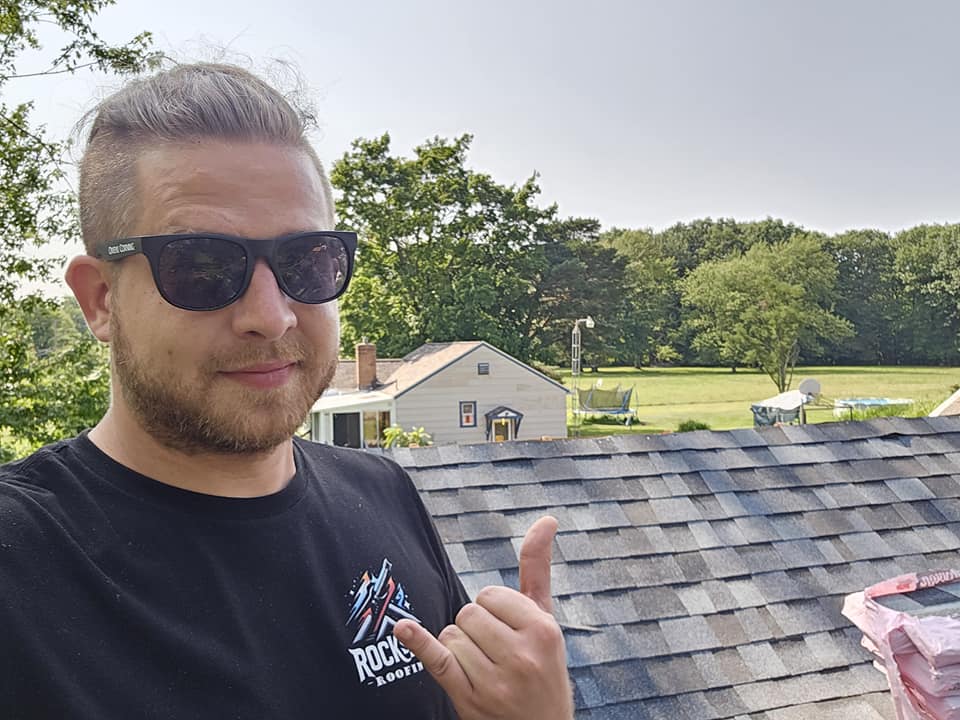
Mike Ende — Founder, Rockstar Roofing LLC
Mike Ende has 9+ years of Northeast Ohio roofing experience and founded Rockstar Roofing LLC in 2024. He is an Owens Corning Duration installer, BBB A-rated, fully insured, and personally answers the phone at (440) 645-2003. Based in Ashtabula, OH, Mike serves homeowners across Ashtabula, Lake, Geauga, Cuyahoga, Summit, and Mahoning counties.
Read Mike’s full story →This article was last reviewed and updated on May 11, 2026 by Mike Ende, founder of Rockstar Roofing LLC.