
Ridge cap shingles are the small dimensional shingles that cover the peak of your roof — where two slopes meet at the very top. They look like a small detail, but they take the most weather of any shingle on the roof and typically fail before the field shingles do.
Here's what's actually going on at the top of your roof and why it matters.
What Ridge Cap Shingles Do
Three jobs:
**1. Weatherproof the ridge.** The ridge is where two roof slopes meet at a sharp peak. Without ridge caps, water would run directly into the gap between slopes. Caps overlap the top course of field shingles on both sides, creating a weatherproof seal at the peak.
**2. Cover ridge ventilation.** If your roof has a continuous ridge vent (recommended on most Northeast Ohio homes), the vent itself is a narrow opening at the peak. Ridge caps cover the vent assembly while still allowing air to pass through.
**3. Aesthetic completion.** The dimensional profile of ridge caps creates the finished look at the roof peak. Without proper caps, the roof looks unfinished and the ridge appears flat.
Why Ridge Caps Fail First
Three reasons:
**1. Most direct wind exposure.** Wind hitting any roof slope first encounters the ridge. The cap shingles take the highest wind force, especially during gusts that exceed 60 MPH.
**2. Maximum sun exposure.** Ridge cap shingles have the most direct sun angle exposure on a typical roof. UV degradation and surface heating happen faster here than on slope shingles.
**3. Freeze-thaw extremes.** The peak of the roof experiences the largest temperature swings — direct sun heats it during the day, radiative cooling drops it overnight. Freeze-thaw cycles are most aggressive at the ridge.
The result: ridge cap shingles in Northeast Ohio typically fail 3-5 years before the field shingles. By year 22-25 of an architectural shingle roof, the ridge caps may be visibly degraded while the field shingles look fine.
Two Wrong Ways to Install Ridge Caps
Both common, both leak-prone:
**1. Cut field shingles used as ridge caps.** Some contractors cut three small pieces from a regular field shingle and install them as ridge caps. This saves the cost of dedicated ridge cap product but creates several problems: the cut edge isn't sealed against water, the cap lacks the dimensional weight that wind warranty calculations assume, and the visual appearance is flatter than a proper dimensional cap.
**2. Improper nailing pattern.** Ridge caps need at least two nails per cap, placed in the seal strip area where the next cap will overlap. Too few nails or wrong placement creates wind-vulnerable caps that lift in even moderate gusts.
When evaluating any contractor's estimate, ask specifically: "Are you using matching ridge cap shingles or cut field shingles?" The answer tells you a lot about the rest of the install.
What Proper Ridge Cap Installation Looks Like
Five elements:
**1. Matching dimensional ridge cap product.** Owens Corning DecoRidge is what we use most. GAF TimberTex, CertainTeed Mountain Ridge are equivalents. The cap is a dedicated product, not cut from field shingles.
**2. Correct overlap.** Each cap overlaps the next by approximately 5 inches. The exposed area on a typical cap is 6-7 inches.
**3. Proper nailing.** Two nails per cap minimum, placed approximately 1 inch from each side and inside the seal strip area.
**4. Direction matters.** Caps go on starting from the lee side of prevailing winds (in Northeast Ohio, that's the east end of an east-west ridge). This way the wind doesn't catch the exposed cap edges.
**5. Sealing exposed nails.** The final cap at the end of the ridge has exposed nails. These should be sealed with a small dab of roofing cement to prevent water entry.
What Failed Ridge Caps Look Like
Five visible signs:
- **Missing caps.** Most obvious. Wind has lifted and removed individual caps. Replace immediately.
- **Lifted edges.** Caps are still in place but have curled or lifted edges visible from the ground.
- **Rust streaks running down from the ridge.** Indicates failed ridge vent (if present) where water has entered behind the caps.
- **Visible cracking on cap surfaces.** Late-stage degradation. Usually means the rest of the roof is also degrading.
- **Granule loss visible on caps but not field.** Caps wearing faster than slopes — typical late-life pattern.
When to Replace Ridge Caps Only (Without Replacing the Whole Roof)
If your field shingles are still in good condition (10-15 year old roof, good remaining life), but ridge caps are failing — replacement of just the ridge caps is reasonable. Cost: $400-$1,500 depending on ridge length and accessibility.
If field shingles are 18+ years old and ridge caps are failing, full replacement makes more sense. The ridge cap repair extends roof life by maybe 2-3 years; full replacement extends it by 25-30.
Ridge Cap During a Full Roof Replacement
Every Rockstar Roofing replacement includes:
- Owens Corning DecoRidge or matching dimensional ridge cap (not cut field shingles)
- Two nails per cap minimum
- Proper overlap (approximately 5 inches)
- Sealed exposed nails at ridge ends
- Same color and product line as field shingles
Total ridge cap material on a typical 30-foot ridge: approximately 40-50 individual cap shingles.
Free Ridge Cap Inspection
Call (440) 645-2003 or request a free inspection. We document ridge cap condition with photos during every inspection. Ridge cap repair or replacement quoted as a separate option from full roof replacement when both make sense.
Sources & Further Reading
- Owens Corning DecoRidge specifications
- International Residential Code R905 — roof covering requirements
- Asphalt Roofing Manufacturers Association — installation guidelines
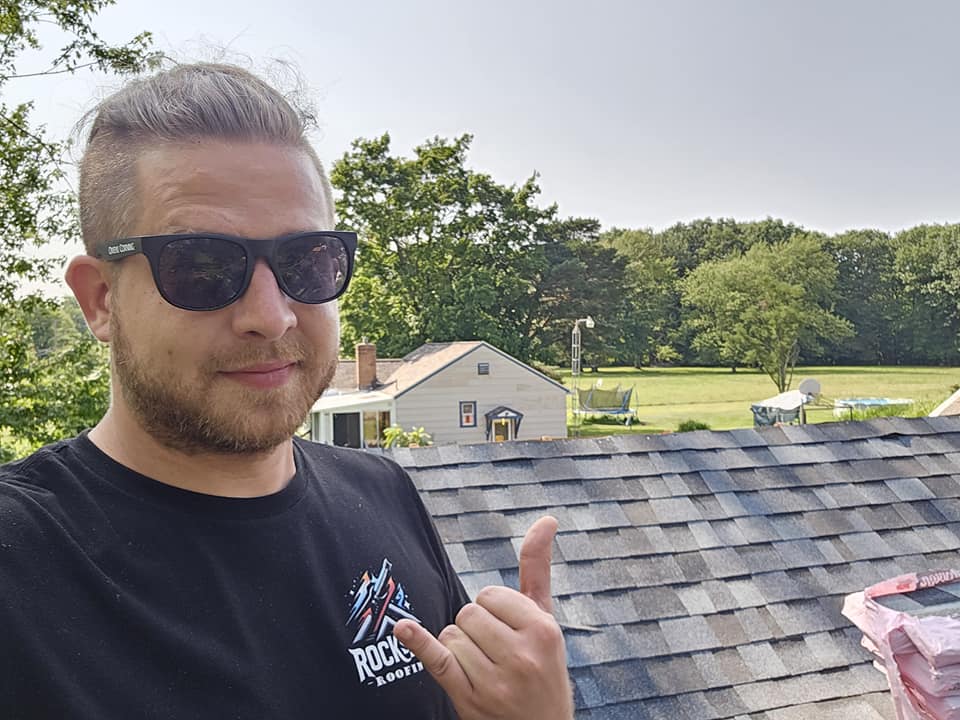
About the Author
Mike Ende — Founder, Rockstar Roofing LLC
Mike Ende has 9+ years of Northeast Ohio roofing experience and founded Rockstar Roofing LLC in 2024. He is an Owens Corning Duration installer, BBB A-rated, fully insured, and personally answers the phone at (440) 645-2003. Based in Ashtabula, OH, Mike serves homeowners across Ashtabula, Lake, Geauga, Cuyahoga, Summit, and Mahoning counties.
Read Mike’s full story →This article was last reviewed and updated on June 9, 2026 by Mike Ende, founder of Rockstar Roofing LLC.