
Many of my conversations with Northeast Ohio homeowners start with a water stain on the ceiling, missing shingles after a storm, or a leak you keep putting pots under. The next question is always the same: repair or replace?
The answer depends on the roof. A good local roofer gives you both options and walks you through the math. A bad one will sell you a $14,000 replacement when a $400 repair would buy you another five years.
Here is the framework I use on every estimate at Rockstar Roofing LLC, based in Ashtabula, Ohio.
When Repair Is the Right Answer
Repair is usually right when all of the following are true:
- The roof is under 15 years old
- Damage is localized to a single slope, valley, or feature (one chimney, one pipe boot, one wind-lifted section)
- The roof deck under the damage is sound, with no rot, sagging, or soft spots
- Granule loss is concentrated, not spread across multiple slopes
- The attic shows no widespread moisture damage
- Insurance is not already approving a full replacement
Targeted repairs in Northeast Ohio typically run $300–$2,000. A patched-and-properly-flashed section on a 10-year-old roof can perform identically to the rest of the roof for the remainder of its lifespan. There is nothing wrong with extending the life of a roof you are not yet ready to replace.
When Replacement Is the Right Answer
Replacement becomes the right answer when one or more of these is true:
- The roof is 20+ years old (asphalt) or 30+ years old (metal)
- Wind or hail damage spans multiple slopes
- Widespread granule loss is exposing black asphalt mat across the roof
- The deck is sagging anywhere
- You can see daylight or fresh water staining in the attic
- You have had three or more repair calls in the last 36 months
- Insurance has approved a full claim after a documented storm
- You are planning to sell the home within 24 months
The age threshold matters more than most homeowners realize. A 22-year-old asphalt roof with a single bad valley is technically repairable, but the rest of the roof is at the end of its useful life. Paying $1,500 for a repair this year and $11,000 for a replacement next year costs more than replacing now.
The Specific Test: Multiple Slopes vs. One
After a storm in Mentor, Painesville, Chardon, or Ashtabula, the first thing I check on a roof is how many slopes are damaged. Single-slope damage from a fallen branch or one isolated wind event almost always points toward repair. Damage on two or more slopes from hail or sustained wind almost always points toward replacement, because the damage pattern proves the entire roof took the storm.
Insurance adjusters use this same test. If they see hail bruising on the north, east, and west slopes, they generally approve a full replacement. Single-slope hail damage gets a targeted repair allowance.
The Hidden Damage Problem
The hardest part of the repair-or-replace decision is what you cannot see from the ground. A roof can look fine and be 18 months from a major leak. Three things hide damage:
- Bruised shingles from hail: the granule layer is loose, but it has not fallen yet. Visible only on the roof itself.
- Compromised underlayment: wind-lifted shingles that re-sealed but tore the underlayment beneath them.
- Deck rot under intact shingles: slow leaks that have been wetting the OSB or plywood for years before showing inside.
That is why a professional inspection matters. A roofer standing on the roof catches what a homeowner cannot see from the driveway.
The Cost Math
Average targeted repair across Northeast Ohio: $300–$2,000.
Average full asphalt replacement on a 1,500–2,000 sq ft home: $9,000–$15,000.
A repair is worth doing when it buys you at least 5 more years of useful life on the rest of the roof. If the rest of the roof has less than 5 years left in it anyway, a repair is throwing money away.
Compare to the cost of NOT replacing when you should:
- Interior drywall repair from a single bad leak: $800–$3,000
- Insulation replacement: $1,500–$5,000
- Mold remediation: $2,000–$15,000
- Hardwood floor replacement from sustained moisture: $3,000–$12,000
Putting off an obvious replacement to save $11,000 today routinely costs $20,000+ over the next 24 months.
Insurance Changes the Math Completely
If a documented storm has caused the damage and your insurance approves the claim, the calculation flips. With a covered claim, you pay your deductible (typically $1,000–$2,500) and insurance covers the rest of the replacement. At that point, a repair instead of a replacement means you pay for work your policy would have covered.
I document storm damage, file your claim with the right terminology, and meet your adjuster on-site. Having a contractor on the roof during the adjuster visit is what gets borderline damage pointed out and written into the scope.
Red Flags From Contractors
A few things to watch for when getting estimates:
- A contractor who looks at a 12-year-old roof with one bad section and quotes a full replacement without explaining why
- An estimate that says "tear off as needed" without specifying exactly which sections
- Pressure to sign a contract on the spot, especially after a storm
- No written scope of work, no brand of shingles, no warranty terms
- Door-to-door sales after a storm, especially with out-of-state plates
A real local contractor walks the roof with you, takes photos, explains what is wrong, presents both repair and replacement options where appropriate, and lets you take a written quote home to compare.
Should I Repair or Replace My Roof?
Most repair-or-replace decisions in Northeast Ohio fall into three buckets:
- Roof under 12 years old, single-slope damage → repair
- Roof 12–18 years old, scattered damage, no insurance claim → judgment call based on remaining life and budget
- Roof 18+ years old, OR multi-slope damage, OR insurance-approved claim → replace
Get a professional inspection before you decide. I'll tell you which one your roof needs. We do not sell a replacement the roof doesn't need, and we do not push repairs on a roof at the end of its life.
Call (440) 645-2003 or request a free estimate online. Mike Ende answers the phone himself.
Frequently Asked Questions
How old is too old to repair a roof?
An asphalt roof 20+ years old, or a metal roof 30+ years old, is usually a replacement. A 22-year-old asphalt roof with one bad valley is technically repairable, but the rest of it is at the end of its useful life. A repair is worth doing only when it buys at least 5 more years.
How much does a roof repair cost compared to a replacement in Northeast Ohio?
A targeted repair in Northeast Ohio typically runs $300 to $2,000. A full asphalt replacement on a 1,500 to 2,000 sq ft home runs $9,000 to $15,000. Putting off an obvious replacement to save $11,000 today routinely costs $20,000+ over the next 24 months.
Does insurance change the repair or replace decision?
Yes. If a documented storm caused the damage and your insurer approves the claim, you pay your deductible, typically $1,000 to $2,500, and insurance covers the rest of the replacement. Adjusters who see hail bruising on several slopes generally approve a full replacement.
How many repair calls mean it's time to replace?
Three or more repair calls in the last 36 months points toward replacement. So does damage on two or more slopes, because that pattern shows the whole roof took the storm.
What are red flags in a roofing estimate?
Watch for a full replacement quote on a 12-year-old roof with one bad section and no explanation. Other red flags are 'tear off as needed' with no sections named, pressure to sign on the spot, and no written scope, shingle brand, or warranty terms. Door-to-door sales after a storm, especially with out-of-state plates, is another.
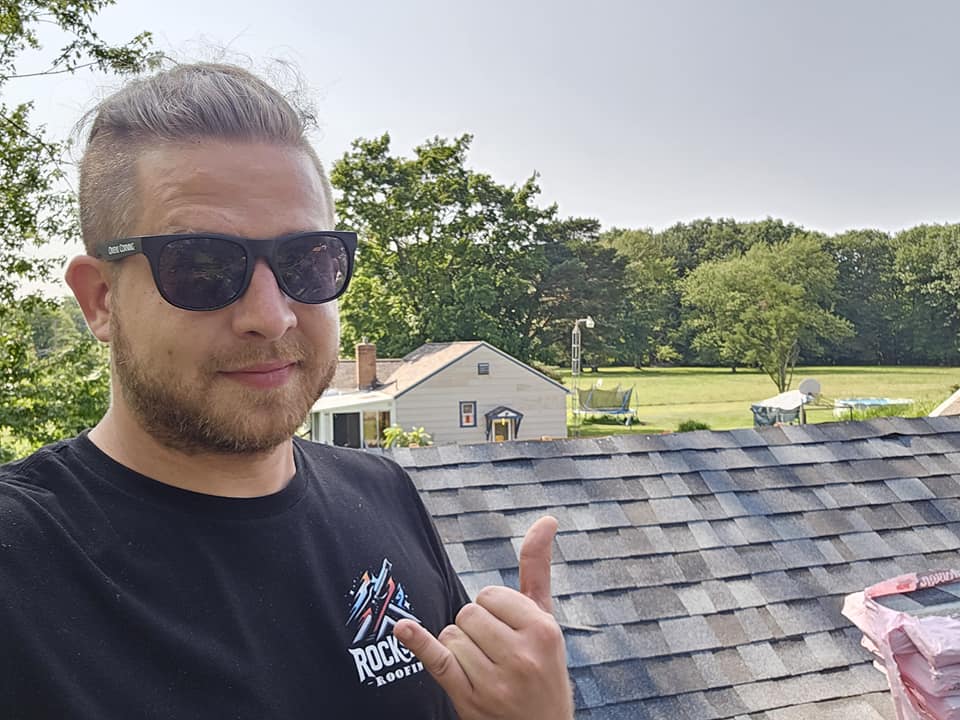
About the Author
Mike Ende, Founder, Rockstar Roofing LLC
Mike Ende has 9+ years of Northeast Ohio roofing experience and founded Rockstar Roofing LLC in 2024. He is an Owens Corning Duration installer, BBB A-rated, fully insured, and personally answers the phone at (440) 645-2003. Based in Ashtabula, OH, Mike serves homeowners across Ashtabula, Lake, Geauga, Cuyahoga, Summit, Mahoning, and Stark counties.
Read Mike’s full story →This article was last reviewed and updated on November 7, 2026.