
Skylights are the second-most-common roof leak source we see in Northeast Ohio, behind chimneys. They look simple from below, but every skylight is a complex assembly of frame, seal, flashing, and weatherstripping — all of which can fail.
Here's why they leak, how to identify the actual failure, and what's worth repairing vs. replacing.
Why Skylights Leak So Often
Three structural reasons:
**1. Multiple failure points in a small area.** Every skylight has at least four flashing transitions (top, bottom, both sides), a frame-to-glass seal, weatherstripping, and the underlayment beneath the frame. Any one failure produces a leak.
**2. Thermal stress.** The glass and frame heat up in direct sun and cool off rapidly at night. The expansion and contraction stresses every seal in the assembly. Multiply by Ohio's freeze-thaw cycles and you get accelerated failure.
**3. Condensation that's mistaken for a leak.** Skylights are essentially a thermal hole in your insulation. In winter, warm humid interior air condenses on the cold inner glass, runs down the frame, and drips inside. Homeowners see "water from the skylight" and assume a leak. Often it's condensation.
The Three Real Leak Sources
**1. Failed glass-to-frame seal (most common after year 15).** The rubber or silicone gasket that holds the glass to the frame dries out, cracks, and lets water through directly. You'll see water dripping from the lowest point of the skylight glass even during light rain.
**2. Failed flashing.** The metal flashing that wraps where the skylight meets the surrounding shingles. Like chimney flashing, it fails at the 15–25 year mark. You'll see water dripping from the frame edge or staining the ceiling around the skylight (not directly underneath).
**3. Compromised underlayment.** The waterproof membrane beneath the skylight assembly. Rare on newer installs but common on skylights from the 1980s and 90s. Diagnosed by leaks that appear far from the skylight itself, where water has run along the deck before exiting.
How to Tell Condensation From a Real Leak
Five tests:
**1. Time of year.** Condensation is dramatically worse in winter when interior humidity is high and outer glass is cold. A "leak" that only appears during winter is usually condensation.
**2. Weather correlation.** A real leak appears during or shortly after rain. Condensation appears regardless of outside weather.
**3. Location of the water.** Condensation runs down from the inner glass; you'll see it pooling at the bottom edge of the inner frame. A leak shows up at the upper edges or as staining on the ceiling around the skylight.
**4. Glass appearance.** Condensation often leaves visible streaks or fog on the inner glass. A leak doesn't.
**5. Interior humidity check.** If you have a humidifier running, gas appliances vented improperly, or a poorly ventilated bathroom under the skylight, condensation is more likely.
If it's condensation, the fix is usually adding a roof-window blind to insulate the inner surface, improving room ventilation, lowering interior humidity in winter, or replacing the skylight with a modern dual-pane low-E unit.
When to Repair the Skylight
Repair makes sense if:
- The skylight is under 12 years old
- The leak is clearly at the flashing (not the glass-to-frame seal)
- The surrounding roof is in good shape
- Replacement parts are available from the manufacturer
Typical repair scenarios:
- **Re-flashing only:** $400–$900. Removes the surrounding shingles, replaces the metal flashing, reinstalls the shingles.
- **Glass replacement (if pane is fogged or seal is failing):** $300–$700 plus parts.
- **Weatherstripping replacement:** $150–$300.
When to Replace the Skylight
Replacement makes sense when:
- The skylight is 15+ years old
- The glass-to-frame seal is failing (typically the death of any skylight)
- Multiple failure points are present
- You want to upgrade to dual-pane low-E glass for better energy efficiency
- The frame is aluminum and showing significant corrosion
Modern skylight replacements typically run $1,000–$2,500 for a quality dual-pane unit professionally installed. Premium models (electric vent, blinds, smart glass) run higher. A new skylight should last 20–30 years and dramatically reduces both leak and condensation issues compared to a 1990s unit.
Skylight Replacement During a Full Roof Replacement
If you're replacing the whole roof and you have skylights that are 15+ years old, replacing them at the same time is the right call. The roof is already torn off around them — the labor cost of swapping the skylight is dramatically lower at this point than at any other time. Adding a skylight replacement to a roof replacement is typically $700–$1,500 per unit, vs. $1,500–$2,500 if done as a standalone job later.
What We Look For During a Skylight Inspection
Free inspection covers:
- Glass condition (fog, streaks, cracks)
- Inner and outer seal integrity
- Flashing condition on all four sides
- Surrounding shingle condition
- Visible condensation patterns
- Underlayment integrity (where accessible from attic)
- Manufacturer's date stamp (to estimate remaining service life)
- Whether replacement makes more sense than repair
We document everything with photos and provide a written estimate for whatever the right fix turns out to be.
Common Mistakes Homeowners Make
Three patterns:
**1. Sealing the leak from below.** Caulk applied to the inside ceiling around the skylight. Doesn't fix the source — water still comes in, just travels further before showing.
**2. Roofing tar on the flashing.** A quick fix that buys 1–2 years and makes proper repair more expensive later because the tar contaminates the surrounding shingles.
**3. Ignoring the leak hoping it'll resolve.** Skylight leaks compound — each event saturates more insulation, grows the stain, and adds drywall replacement to the eventual repair scope.
Free Inspection
Call (440) 645-2003 or request a free skylight inspection. We diagnose the actual failure mode, give you a written estimate for repair or replacement, and tell you honestly which makes more sense for your specific skylight and roof age.
About the Author
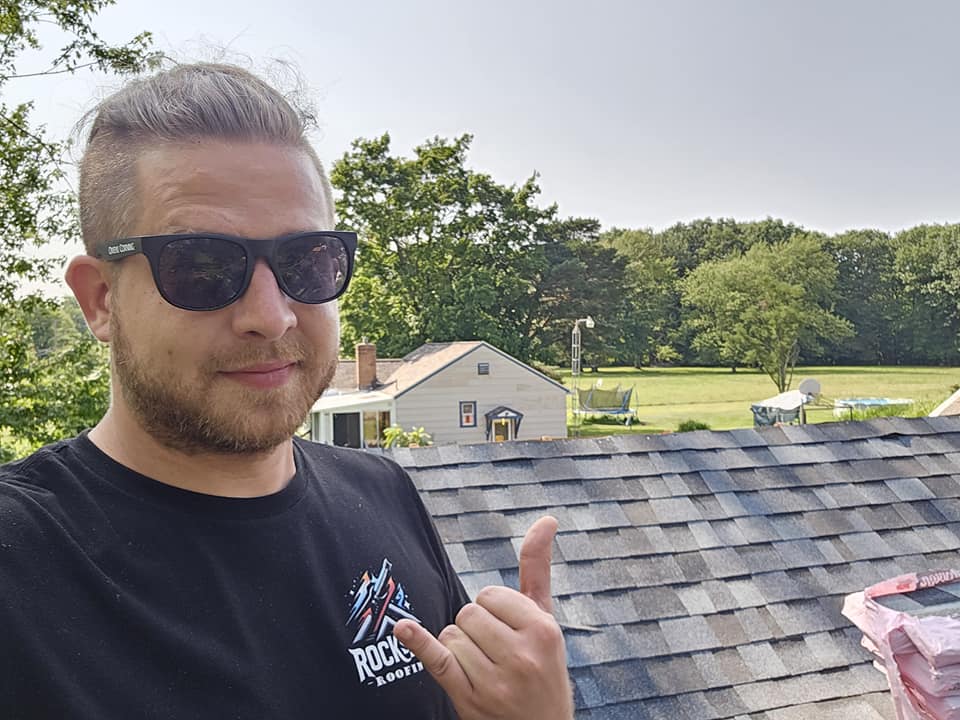
Mike Ende — Founder, Rockstar Roofing LLC
Mike Ende has 9+ years of Northeast Ohio roofing experience and founded Rockstar Roofing LLC in 2024. He is an Owens Corning Duration installer, BBB A-rated, fully insured, and personally answers the phone at (440) 645-2003. Based in Ashtabula, OH, Mike serves homeowners across Ashtabula, Lake, Geauga, Cuyahoga, Summit, and Mahoning counties.
Read Mike’s full story →This article was last reviewed and updated on May 15, 2026 by Mike Ende, founder of Rockstar Roofing LLC.