
Most Northeast Ohio homeowners think of winter as the season that destroys roofs — ice dams, snow load, freeze-thaw. All real. But here's what surprises people: your roof takes more daily punishment in July and August than it does in January.
Summer doesn't announce itself the way a February ice dam does. There's no dramatic leak, no chunk of ice hanging off the gutter. Summer damage is quiet, cumulative, and invisible from the driveway. By the time you see it from the ground, the shingle has usually been failing for two or three seasons.
Here's what's actually happening up there, and why the end of summer — late August into early September — is the right window to look.
Three Things Summer Does to Your Shingles
**1. UV breaks down the asphalt.** Asphalt shingles are, at their core, asphalt. Ultraviolet light breaks the chemical bonds in that asphalt binder the same way it fades a car dashboard or cracks a garden hose. Northeast Ohio summers run long daylight hours, and a south- or west-facing slope takes direct UV for most of the day. Over years, UV dries the binder out, and the shingle loses the flexibility it needs to seal flat and shed water.
**2. Heat bakes out the oils.** On a 85°F day, the surface of a dark shingle can reach 150-170°F. That's not an exaggeration — it's measurable with an infrared thermometer. At those temperatures, the volatile oils that keep a shingle pliable cook off. A shingle that's lost its oils gets brittle, and brittle shingles crack at the edges and lose their granules.
**3. Thermal cycling loosens everything.** This is the one nobody thinks about. Every single day, your roof goes from a cool 60°F morning to a 150°F+ afternoon and back down overnight. Everything on the roof expands in the heat and contracts as it cools — shingles, nails, flashing, sealant. Do that 90 days in a row and nails back out slightly, sealant strips crack, and the tabs that were glued down in spring start to lift. Thermal cycling is the slow, invisible engine of summer roof aging.
What the Damage Actually Looks Like
You usually can't see any of this from the ground, which is exactly why it gets ignored. Up close, it shows as:
- **Granule loss.** Bald or shiny patches where the protective granules have worn off, exposing the asphalt underneath. You'll often find the granules first — black, sandy grit in the gutters and at the bottom of downspouts.
- **Brittle, cracking edges.** Shingle corners that have curled up or cracked. Cupping in the middle of the field.
- **Lifted tabs.** Shingles that are no longer sealed flat — the wind catches the edge and folds it back. One summer storm finishes the job.
- **Failed pipe-boot rubber.** The rubber gaskets around plumbing vents are the single most UV-vulnerable part of your roof. Summer cracks them, and a cracked boot is a guaranteed leak by midwinter.
Why End-of-Summer Is the Right Time to Look
Two reasons, and they're both about timing.
First, the damage is fresh and fixable. A lifted tab re-sealed in September is a 10-minute repair. The same tab left through a Northeast Ohio winter becomes a wind-torn gap, a soaked deck, and a stained ceiling by March. Catching summer damage in early fall is the difference between a small repair and a winter emergency.
Second, you beat the rush. Every roofer in the region gets slammed once the first cold snap and the first ice dam hit. Calls in November and December are booked out, and the weather makes good work harder. A late-August or early-September inspection means you're scheduling repairs while crews have open calendars and the weather is still on your side. (When you're ready for the full pre-freeze rundown, our fall pre-winter roof checklist walks through all 14 points.)
The Honest Part: Sometimes There's Nothing Wrong
Here's something a lot of contractors won't say. A lot of the time, an end-of-summer check turns up nothing urgent. A roof that's 8 years old with decent ventilation often sails through summer fine. If that's your roof, we'll tell you that — and you go into winter with peace of mind instead of a nagging worry every time it rains.
The roofs that need attention are usually the ones over 12-15 years old, the ones on the south and west slopes with all-day sun, and the ones with poor attic ventilation that bakes the shingles from underneath as well as on top. (Ventilation matters more than most people realize — here's why roof ventilation matters.)
What to Do This Week
1. **Walk your gutters and downspout splash zones.** Black, sandy granules mean your shingles are shedding their UV protection. That's your first warning sign.
2. **Look at your roof from the ground with binoculars.** Scan for lifted tabs, curled corners, or bald patches. Check the south and west slopes hardest.
3. **Check your pipe boots if you can see them.** Cracked or split rubber around the vent pipes is the most common summer-into-winter leak source.
4. **If your roof is over 12 years old, get a set of professional eyes on it.** A free inspection now costs you nothing and tells you exactly where you stand before the weather turns.
The whole point is simple: don't wait for winter to tell you what summer already did. By the time a summer-aged shingle leaks, it's January, it's 20°F, and you're calling around for an emergency repair. Look now, while looking is easy.
Schedule Your Free End-of-Summer Roof Check
Mike answers the phone himself. Call (440) 645-2003 or request a free inspection. Same-week scheduling available across Ashtabula, Lake, Geauga, Cuyahoga, Summit, and Mahoning counties through the fall.
Sources & Further Reading
- Owens Corning — how heat and UV affect shingles
- InterNACHI — asphalt shingle inspection standards
- U.S. Department of Energy — roof and attic ventilation
- Fall Pre-Winter Roof Checklist for Northeast Ohio
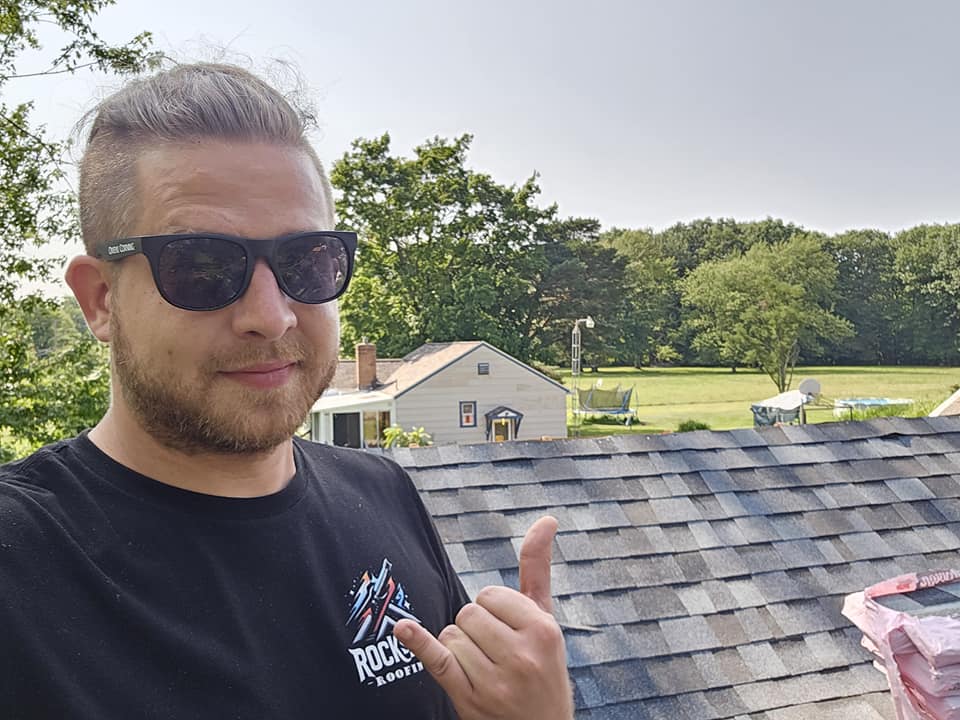
About the Author
Mike Ende — Founder, Rockstar Roofing LLC
Mike Ende has 9+ years of Northeast Ohio roofing experience and founded Rockstar Roofing LLC in 2024. He is an Owens Corning Duration installer, BBB A-rated, fully insured, and personally answers the phone at (440) 645-2003. Based in Ashtabula, OH, Mike serves homeowners across Ashtabula, Lake, Geauga, Cuyahoga, Summit, and Mahoning counties.
Read Mike’s full story →This article was last reviewed and updated on June 3, 2026 by Mike Ende, founder of Rockstar Roofing LLC.